The Almost-Kiss That Built an Empire: How Light Novels Turn Romantic Gaps Into Fan Obsession
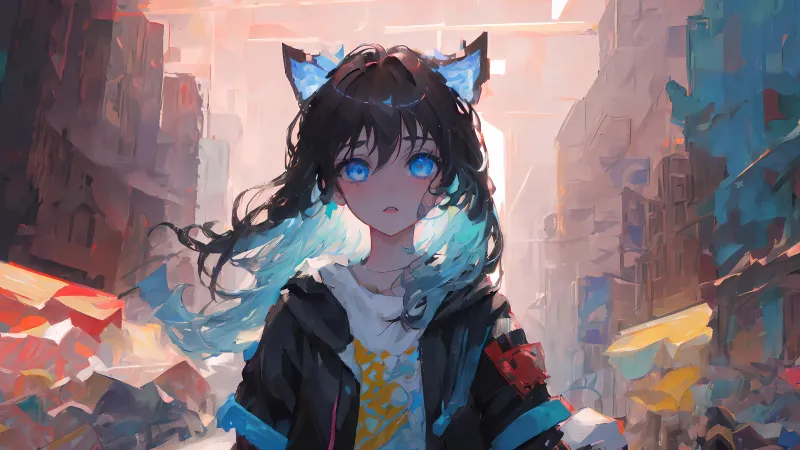
Photo: anime couple romantic moment soft lighting pastel illustration, via wallpapercave.com
Somewhere right now, a light novel fan is writing fanfiction about a scene that technically already happened. The scene is in the book. The characters confessed, or kissed, or had their moment. But the actual text gave it maybe two sentences and then moved on to plot. So the fan is writing the version that should have existed — the version with the racing heartbeat and the fumbled words and the specific way the light was hitting the window.
This is not a fringe behavior. This is the light novel fandom pipeline, and it runs on empty space.
The Compressed Romance Problem (That Isn't Actually a Problem)
Light novels move fast. That's part of their DNA. They're built for readers who want plot momentum, and romance — real, slow, emotionally earned romance — takes up space that a lot of light novel authors aren't willing to spend. So you get the feelings implied rather than shown. The confession that happens in a paragraph. The first kiss that gets a sentence and then a chapter break. The relationship that technically starts between volumes.
From a pure craft standpoint, you could call this a weakness. And sometimes it is. But here's the thing: it also produces some of the most obsessive fan communities in the entire anime and manga ecosystem.
The gaps are the point.
When a story gives you everything, you receive it. When a story gives you almost everything and then cuts away, you complete it yourself — and what you build is yours in a way that a fully written scene never could be. You've done emotional labor for this couple. You've imagined their hands shaking and their voices catching. You've filled in the silence the author left behind, and now you're attached to something you partially created.
That's a bond that's very hard to break.
Why Manga and Anime Adaptations Feel Different
If you've ever read a light novel and then watched its anime adaptation, you've probably experienced the weird phenomenon of feeling like something got added even when content was cut. That's because anime has to make the implicit explicit. A character's internal monologue becomes a voiceover. A moment of emotional tension gets a musical score. The almost-kiss has sound design.
This is not inherently worse — some adaptations nail it — but it does change the fan relationship to the material. When the anime shows you the scene, it becomes a shared reference point. When the light novel implies it, every reader has a slightly different version living in their head. Fan communities built around light novels often have this quality of creative multiplicity, where the headcanon isn't just tolerated, it's almost necessary for fully experiencing the story.
Manga adaptations sit somewhere in the middle. A skilled manga artist can stretch a single moment of romantic tension across several wordless panels and deliver something neither the light novel nor the anime could quite manage. But even then, the manga is an interpretation. The light novel's ambiguity is the source material, and ambiguity, it turns out, is generative.
The Fanfiction Economy of Emotional Gaps
There's a reason certain light novel series have fanfiction archives that dwarf the source material by word count. It's not just that the fans are dedicated (though they are). It's that the text itself is structured in a way that demands completion.
Think about the romantic pairings that generate the most fan content across any medium — they tend to share a few qualities. There's strong emotional chemistry. There's some kind of obstacle or tension. And crucially, there's something left unresolved or underwritten. The will-they-won't-they energy doesn't disappear when the characters get together; it just transforms into something else. Fans want to see the relationship lived in, and light novels rarely have time for that.
So fans write the domestic mornings. The arguments that get resolved. The small moments of comfort that the plot never stopped for. They're not filling a hole the author left by accident. They're responding to a structural feature of the format.
What to Read If You Want to Fall Into This
If you're new to this particular flavor of light novel fandom experience, a few recommendations for series that do this especially well:
Look for titles where the romantic leads have significant chemistry and clear emotional development but where the actual romance beats are handled obliquely. Series in the romantic comedy space — particularly those where the protagonist has an unreliable emotional perspective — tend to generate the most creative fan response, because the gap between what the character understands about their own feelings and what the reader understands is itself a kind of dramatic irony that fans love to explore.
Also worth paying attention to: how the manga adaptation handles the same material. Comparing the two versions often reveals exactly where the light novel was doing something subtle that's easy to miss on first read.
The Attachment Is the Point
At the end of the day, the rushed romance in light novels isn't really about romance being unimportant to the format. It's about a different theory of what stories are for. The light novel gives you the shape of a relationship. The fans build the texture. And somewhere in that collaboration between author and audience, something gets created that neither could have made alone.
That's not a flaw in the reading experience. That's the reading experience.
The awkward, blink-and-you-miss-it kiss isn't the end of the story. It's the beginning of a much longer one — the one happening in the comments sections and the fanfic archives and the Discord servers where people are still, years later, talking about two fictional people who almost held hands in chapter seven.


