Nothing Happens (And That's the Point): The Quiet Power of Slow-Burn Light Novels

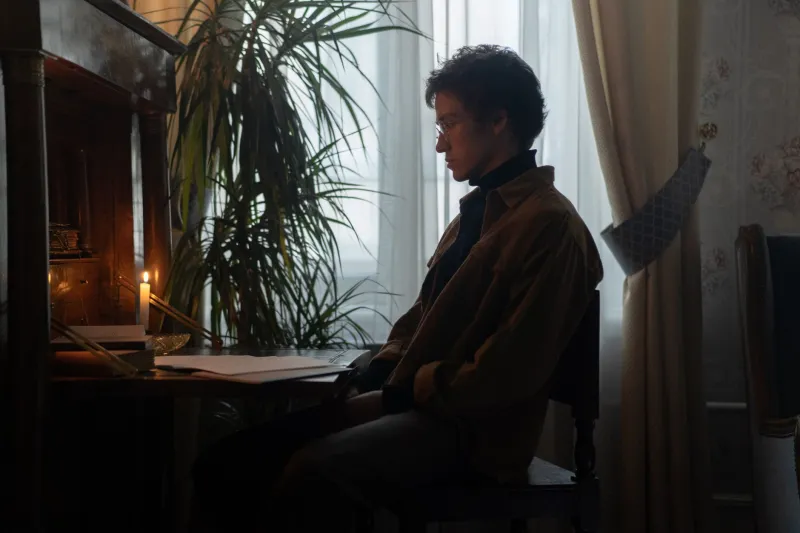
Photo by Photo by Galina Kondratenko on Unsplash on Unsplash
If you pitch a light novel to an American reader by saying "the first volume is mostly the main character thinking, walking around, and having quiet conversations," you're probably going to lose them before you finish the sentence. We're a culture that was raised on three-act structure, inciting incidents, and the unspoken rule that every scene needs to do something. Tension is currency. Plot is the point.
So it's interesting — genuinely interesting — that some of the most talked-about light novels in Western fan communities right now are the ones where, by conventional standards, almost nothing happens.
The Atmosphere-First Approach
There's a category of light novel that prioritizes something other than plot momentum. Instead of asking "what happens next?", these stories are more concerned with "what does this moment feel like?" They spend pages — sometimes entire chapters — inside a character's internal monologue. They describe the quality of afternoon light through a school window, or the particular silence of a room after someone says something they can't take back.
This is atmosphere-first storytelling, and it requires a very different kind of reading than most Western narrative fiction trains you for.
Kino's Journey by Keiichi Sigsawa is a useful entry point here. Structurally, it's a series of short vignettes about a traveler named Kino moving between strange, self-contained countries. There's no overarching plot driving the series forward, no escalating villain, no romance arc building toward a climax. What there is is a persistent, meditative quality — a sense that the story is less interested in where Kino is going than in what it means to keep moving at all. For readers who lean in rather than resist that, it becomes hypnotic.
Why Internal Monologue Hits Different
One of the structural advantages light novels have over manga — and over most Western YA or genre fiction — is that they're deeply comfortable in a character's head. The internal monologue isn't a brief pit stop between action beats. It's often the primary mode of the story.
This matters because interiority is where character actually lives. We can watch someone do things and infer who they are, but reading their unfiltered thoughts — their contradictions, their self-deceptions, their private observations about the world — creates a kind of intimacy that's hard to replicate through action alone.
The Melancholy of Haruhi Suzumiya by Nagaru Tanigawa, one of the light novels that helped introduce the format to Western audiences, works largely because of Kyon's internal voice. His dry, frequently exasperated narration isn't just comedy — it's the lens through which the entire story is filtered. You're not just watching events unfold; you're experiencing them through a specific, highly personal consciousness. That's a fundamentally different reading experience than a plot-driven third-person narrative.
More recently, titles like The Empty Box and Zeroth Maria by Eiji Mikage have pushed this even further, using introspective narration to dig into questions of identity, repetition, and what it means to be a self. The plot exists, but it's almost incidental to the philosophical and emotional texture the story is building.
The Pacing Problem (And Why It's Not Actually a Problem)
Here's where American readers often hit a wall: slow-burn light novels demand that you adjust your sense of what constitutes progress.
In a typical Western thriller or fantasy novel, you're trained to feel narrative velocity. Things are happening, pieces are moving, and if they're not, you start to feel cheated. That expectation is so deeply baked into how we read that encountering a story that deliberately resists it can feel, at first, like something is wrong.
But pacing is a tool, not a moral obligation. A story that moves slowly isn't a story that's failing to move quickly — it's a story that has decided speed isn't what it's optimizing for. Slow pacing creates space for mood, for the accumulation of small emotional details that, over time, hit harder than any single dramatic event.
Think about how differently you experience music at different tempos. A slow piece isn't a fast piece that hasn't gotten there yet. It's doing something categorically different with time. Slow-burn light novels are working the same way — they're using extended duration to create a kind of emotional weight that faster stories can't build.
Spice and Wolf by Isuna Hasekura is probably the most mainstream example of this working beautifully for Western readers. The economics of medieval trade aren't exactly pulse-pounding material, and yet the series has a devoted following in the US. The reason is that the slow, conversation-heavy pacing is precisely what makes Holo and Lawrence's relationship feel real. You spend so much time with them, in the texture of their daily interactions, that when emotional moments arrive, they land with a force that a faster story couldn't manufacture.
Learning to Read Differently
There's a skill involved in reading this way, and it's worth naming explicitly: you have to let go of the habit of scanning for plot payoff.
The readers who bounce off slow-burn light novels are often doing so because they're reading for something — waiting for the moment when the story kicks into gear. The readers who fall in love with them are the ones who stop waiting and start inhabiting. They're not reading to find out what happens. They're reading to be somewhere.
That's a shift that's easier said than done, but it's worth practicing. Start with a title you already know has a strong reputation — Spice and Wolf or Kino's Journey are good entry points — and consciously give yourself permission to move at the story's pace rather than pushing against it.
What you'll likely find is that the stories you thought were slow were actually deep. And depth, once you've tasted it, is a pretty hard thing to give up.