Rooting for the Villain: How Manga Makes You Love Characters You Should Probably Hate
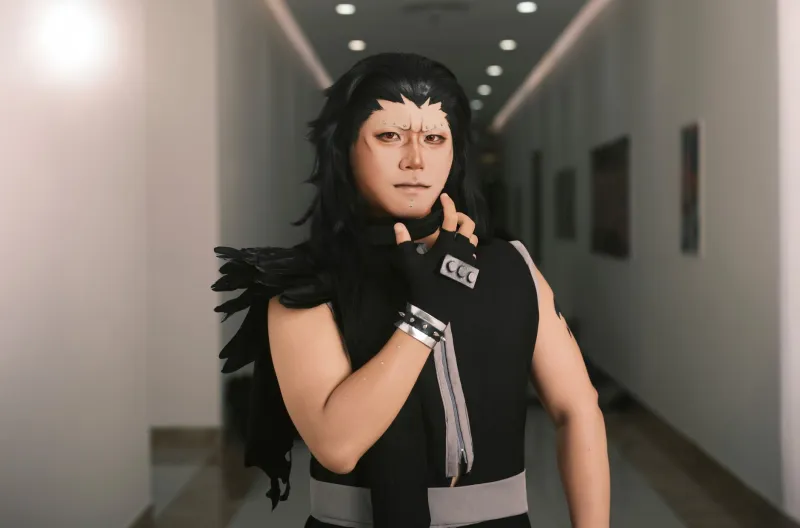
Let's be honest with ourselves for a second. You've been there. You're reading a manga, a character does something objectively awful — betrays a friend, destroys something irreplaceable, hurts someone who didn't deserve it — and you still catch yourself thinking, okay but I get it. Maybe you even open Twitter to defend them. Maybe you've already written a thread.
This is one of manga's quiet superpowers, and it doesn't get talked about nearly enough.
The Inner Monologue That Changes Everything
Western storytelling has a pretty clear framework for villains. They do bad things, we understand they're bad, and if they're going to be redeemed, it usually happens through a grand gesture — a sacrifice, a confrontation, a tearful apology in the third act. The audience gets a clear signal: this person is okay now.
Manga doesn't really work like that.
What manga does instead is quieter and, honestly, more unsettling. It gives you the inside of a character's head while they are still doing the bad thing. You're not watching someone justify themselves in retrospect. You're sitting inside their logic in real time, feeling the weight of whatever twisted reasoning they've built their life around. And because manga panels slow everything down — because a single moment of hesitation can stretch across two pages — you end up spending more emotional time with a character's doubt than you ever would in an anime episode or a Western film.
That's the mechanism. The inner monologue doesn't excuse the character. It implicates you in understanding them.
Backstory as a Trap (A Very Effective One)
Here's where it gets a little manipulative, in the best way. Manga is genuinely brilliant at the delayed backstory reveal. You spend chapters — sometimes volumes — watching a character cause damage. You've already formed a solid opinion of them. Then the story peels back the curtain, and suddenly you're looking at a kid who had no good options, or an adult who made one catastrophic choice under impossible pressure, or someone who was so thoroughly failed by every system around them that their current awfulness starts to look less like a character flaw and more like a logical conclusion.
This isn't the same as excusing bad behavior. The manga usually doesn't excuse it either. But there's a difference between understanding and forgiving, and manga is uniquely comfortable sitting in that gap. It doesn't rush to reassure you that everything is fine. It just shows you the full picture and lets you wrestle with it.
Think about how many fan communities are built almost entirely around that wrestling. The debates, the "he was right actually" posts, the deep dives into a character's childhood chapters. That's not just engagement — that's manga doing its job.
When Vulnerability Hits Harder Than a Redemption Scene
Some of the most effective character work in manga doesn't involve redemption at all. It involves a single moment where the mask slips.
Maybe a character who's spent the entire series being ruthless and closed-off suddenly shows fear. Not a performed fear — a real, caught-off-guard, I-didn't-mean-for-you-to-see-this kind of fear. Or they say something unexpectedly kind and immediately try to walk it back. Or they're alone in a panel, and the expression on their face tells a completely different story than everything they've said out loud.
Those moments don't redeem anyone. But they do something more interesting: they make the character feel real. And once a character feels real, the audience's emotional investment doesn't care much about moral score cards anymore.
Anime adaptations often struggle here. The pacing of an episode doesn't always allow for the kind of sustained silence that manga can hold. A two-page spread of a character staring at something they've destroyed, with no dialogue, no score swelling underneath it — that's information delivered at a reading pace, which is your pace. You control how long you sit with it. That control changes the experience entirely.
What This Says About Us
There's a reason these characters generate such intense fan loyalty, and it's not that manga readers are morally confused. It's that manga creates the conditions for genuine empathy — not sympathy, not approval, but the specific experience of understanding how someone became who they are even when you don't like who they are.
In a culture that's increasingly comfortable with binary judgments, there's something almost radical about a medium that asks you to hold complexity. To say: this character did something I can't defend, and I also see them clearly, and both of those things are true at the same time.
The redemption arc nobody asked for works because manga doesn't really sell redemption. It sells understanding. And understanding, it turns out, is a much harder thing to shake.
So yeah. Keep defending your morally gray faves. The manga earned it.


