Something Gets Lost in Translation: What Anime Adaptations Take From You Without Asking
The announcement drops. Your favorite manga is getting an anime adaptation. The subreddit erupts. Fan art floods your timeline. Everyone's hyped.
And then the first episode airs, and something feels... off.
Not wrong, exactly. Not bad. Just — smaller, somehow. Like someone took a thing that lived inside you and moved it to a museum. Still beautiful. Still technically the same story. But no longer yours in the way it used to be.
If you've ever felt that specific, hard-to-explain disappointment, you're not imagining it. And you're definitely not alone.
The Pace You Set Yourself
Here's something most anime fans don't think about until they've already lost it: manga gives you control of time.
When you're reading, you decide how long a panel lasts. You decide when to turn the page. You can sit inside a character's expression for ten seconds or ten minutes. You can flip back to reread a line of internal monologue the moment it hits different than you expected. Nobody is rushing you. The story breathes at the rate you breathe.
Anime takes that away immediately. The editor's cut decides when you move on. The score tells you how to feel. The voice actor's delivery locks in an interpretation that might not match the one you'd built in your head over months of reading. Suddenly a character who lived in your imagination — with your mental voice, your emotional timing, your private understanding of their silences — is being handed back to you as someone else's version.
That's not a small thing. That's a pretty significant renegotiation of the relationship.
Internal Monologue Is Where the Real Story Lives
Manga does something that anime genuinely struggles to replicate: it gets inside a character's head without making a big deal out of it.
A single caption box. A thought bubble tucked into the corner of a panel. Three words floating next to a character's downcast eyes. That's all it takes for a manga to drop you directly into someone's interior world — quietly, efficiently, without interrupting the visual flow of the scene.
Anime has voiceover, sure. But voiceover is a tool with weight. It signals importance. It announces itself. When an anime uses it too liberally, it starts to feel like narration, like the story explaining itself to you instead of trusting you to feel it. And when adaptations use it sparingly to keep things cinematic, they end up cutting the very thoughts that made you fall in love with a character in the first place.
Think about any slow-burn romance manga you've read — the kind where half the tension lives in what the protagonist doesn't say out loud. The longing is in the gap between what's happening and what they're thinking. Anime has to find a way to externalize that gap, usually through music or lingering reaction shots. Sometimes it works beautifully. But it's never quite the same as reading "I should say something. I don't say anything." in tiny text while a character stares at the floor.
The Intimacy of a Physical Object
There's also something weirdly personal about the act of reading manga that's easy to underestimate until it's gone.
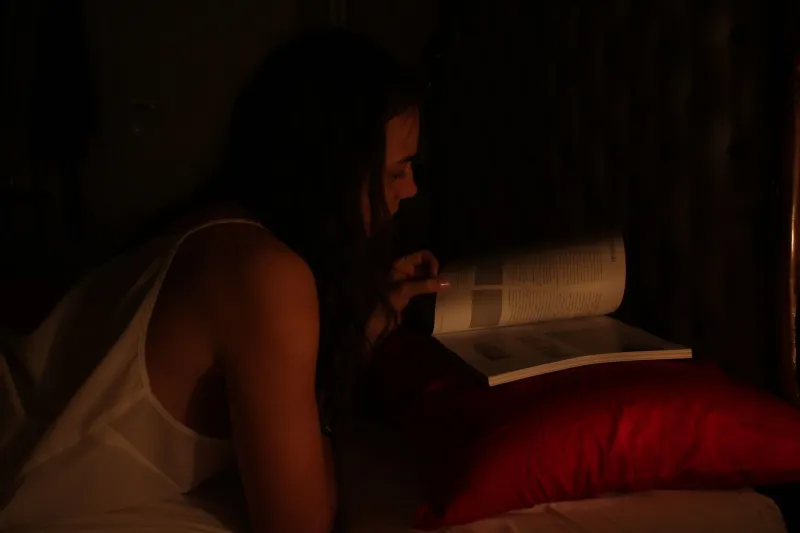
You held those volumes. Maybe you bought them one by one, waiting for each release. Maybe you read scanlations at 2 a.m. on your phone, blanket pulled up, the rest of the house asleep. The story got tangled up with specific memories — where you were, what was going on in your life, how you felt the first time a certain chapter wrecked you.
Manga is an accumulation. Each chapter is a deposit into something you've been building. By the time you're fifty chapters deep, you don't just know the story — you've lived alongside it.
An anime adaptation compresses that into a seasonal event. Twelve or thirteen episodes, weekly drops, then it's over. The experience is shared and communal in a way that manga rarely is, which has its own real value. But communal isn't the same as intimate. And for a lot of manga readers, intimacy is precisely the point.
Why This Actually Matters (It's Not Just Nostalgia)
It'd be easy to write off the "manga was better" crowd as purists being precious about their hobby. But the frustration points to something worth taking seriously.
What manga readers are often mourning isn't really the format. It's the specific kind of relationship the format enabled. Manga, especially long-running series, creates what you might call a parasocial depth that's genuinely unusual — you spend more time inside a character's head, at your own pace, over a longer stretch of your real life, than almost any other narrative medium allows.
When an anime adaptation arrives and flattens or accelerates that experience, it's not just a creative difference. It's a disruption of something that felt personal. And that disruption reveals what you were actually getting from the manga in the first place: not just a story, but a relationship — with characters, with pacing, with the private version of the world you'd built in your own head.
That's worth naming. Because understanding why the adaptation feels like a loss helps you understand what you're actually looking for when you pick up a new series.
The Flip Side (Because It Exists)
None of this means anime adaptations are failures. Some of them are genuinely transcendent — they add dimension through sound design, animation, and score that no static page could replicate. A perfectly animated fight sequence, a piece of music that makes a scene hit three times harder, a voice performance that makes you love a character you only mildly liked before — these are real gifts.
And anime brings stories to people who would never pick up the source material. That's not nothing. The community that forms around a popular adaptation, the memes, the discourse, the fan theories — that's its own kind of magic.
But if you've ever finished an anime season and immediately reached for the manga to "get back to the real thing," you already know what we're talking about here. The anime was the invitation. The manga is where you actually live.
Read Deeper, Feel More
If you're someone who watched an adaptation and felt that nagging sense that something was missing, consider this your permission slip to go find it.
The manga is still there. The internal monologue is still in those caption boxes. The pacing is still yours to control. The quiet moments that got cut for runtime are still sitting on the page, waiting.
Some stories are built to be read — slowly, privately, on your own terms. And no matter how good the adaptation is, that version of the story belongs to you in a way that a streaming episode never quite can.
That's not a complaint. That's actually kind of beautiful.